


Dance Stance
This variation of your massage stance can reduce discomfort, help conserve strength, and use your movement and body weight most efficiently during a session.
Scoliosis is mysterious, and often surprising. Consider that:
Though scoliosis is often thought of as a teenage issue (and it does affect 2-5 percent of teens, and is up to 10 times more common in girls than boys), it is only recently coming to light that scoliosis is even more common later in life. Scoliosis affects up to 40 percent of all adults, men and women, equally.5
Scoliosis often bewilders hands-on practitioners in other ways, as well. More than a few have scratched their heads at scoliosis's resistance to change, and its unique power to induce confusion and dyslexia. ("Is the spine right convex thoracically if the left shoulder is higher?" Answer: Not usually, but it depends.) Not only is its severity hard to gauge without X-rays (Image 3), but the idea that most scoliosis does not cause pain, discomfort, or disability6 confounds many of us whose original training emphasized alignment as the touchstone of spinal health and integration. And, as many well-meaning but overly ambitious practitioners have found, methods intended to passively straighten the spine can just as often make people with scoliosis feel worse.
These are only a few of scoliosis's strange paradoxes and puzzles. If you suspect it's time to reevaluate your own assumptions about scoliosis, following are some ways to start.
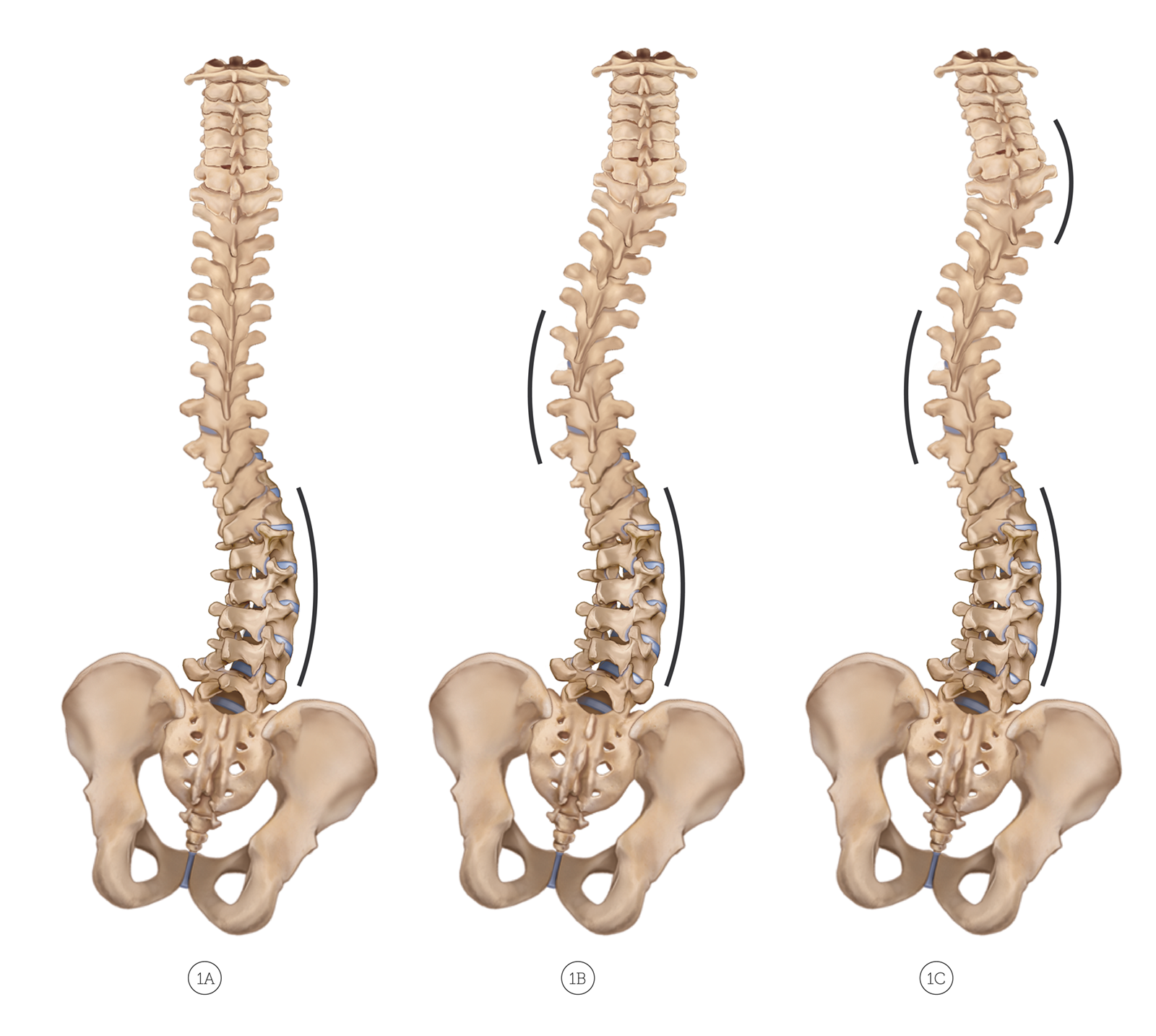
Scoliosis by definition is a lateral curve of the spine. People are said to have a "C-curve" or an "S-curve" scoliosis, but this way of describing scoliotic curves can present problems for hands-on therapists.
The first problem is that the description is not particularly accurate. In real life, the spine rotates whenever it laterally bends (Image 2)7—scoliosis is a twist or a spiral, rather than a flat C- or S-curve. The conventional two-dimensional definition of scoliosis has its origins in the historical practice of assessing scoliosis via photography or by X-ray images later on (Image 3)—both of which give a two-dimensional, flattened-out image of the spine and its shape. Scoliosis, like people themselves, is a three-dimensional phenomenon.
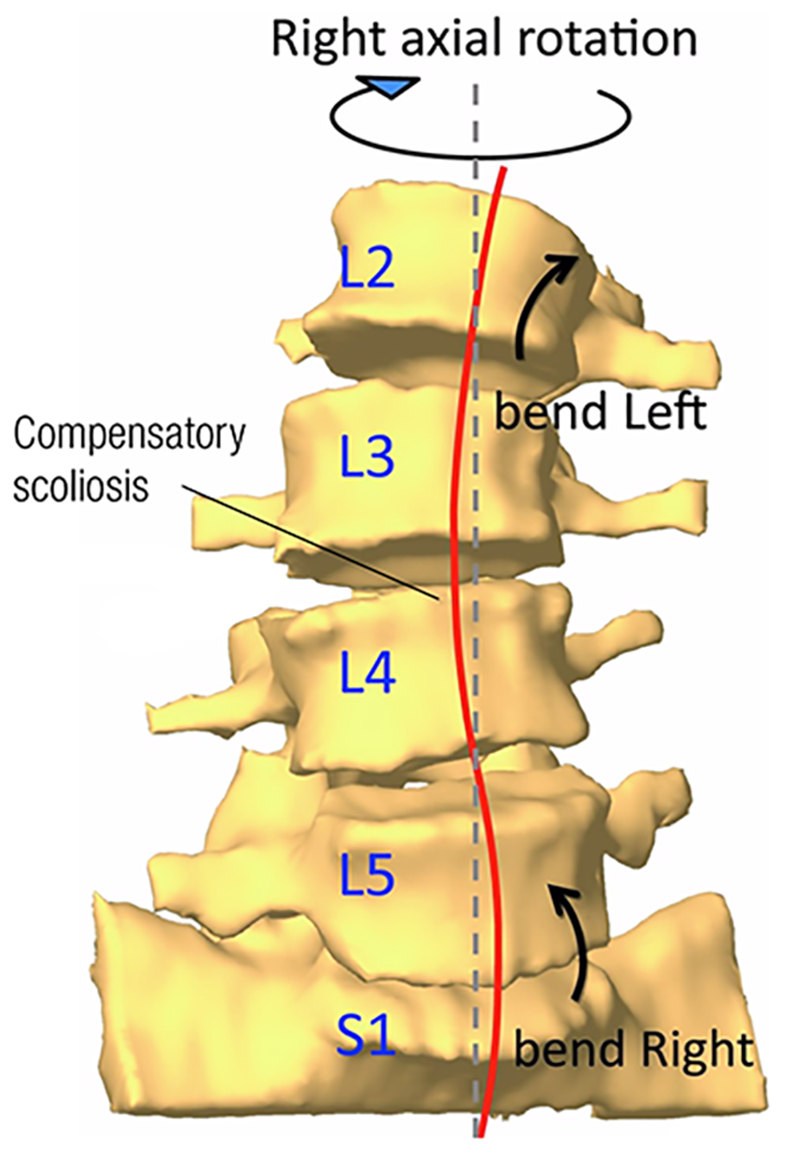
The next problem with the flat C- or S-curve point of view is that two-dimensional thinking leads to two-dimensional treatments. Examples include trying to straighten out the spine by stretching or lengthening the concave (curved in) side of the curve; or, by bending or pushing the convex (curved out) areas sideways across a bolster or peaked table, without regard to the need of the spine to also rotate in order to change its lateral curve.
Sometimes, these single-plane (2D) interventions do actually help people feel better. But, even if we add passive rotation (for example, adding a twist to our bolstered client), we run into the issue that simply trying to stretch, push, or twist scoliosis into a straighter position will often leave people feeling less comfortable, less stable, or less satisfied with their treatments. Even worse, such well-meaning interventions can provoke painful symptoms (like sciatic, leg, or back pain) that weren't troublesome before the treatment. This is related to the next problem with the 2D model, which fortunately also suggests a solution.
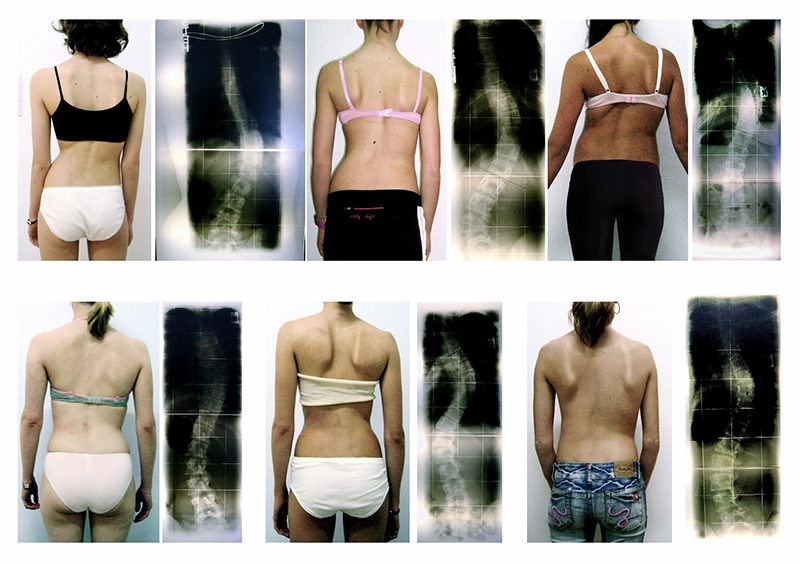
A third problem with the C- or S-model of scoliosis (or even a twisting helical model, which is at least more accurate), is that those are all static descriptions of a dynamic pattern. Still photographs, X-rays, and even 3D imaging capture a single moment in time—but real bodies move. Still images are good at showing us momentary shape and position; but thinking in snapshots gives rise to static interventions, like the stretching, bending, or straightening described above.
The limits of thinking and working in still pictures are not the only drawbacks of stasis. Still clients are also problematic. Encouraging your clients to move more—in their daily lives, and by incorporating active client movement into your hands-on work—will often yield the most satisfying results with scoliosis.
When there is pain with scoliosis (and keep in mind that pain is no more frequent in those with scoliosis than in those without it), hands-on work that simply aims to "correct" the static position or shape of the spine is rarely relieving, and is missing the possibilities that movement affords. Movement has well-documented abilities to reduce and prevent pain in many conditions. Though some people with scoliosis are very flexible in certain directions, when overall flexibility is reduced, scoliosis pain has been shown to increase.8
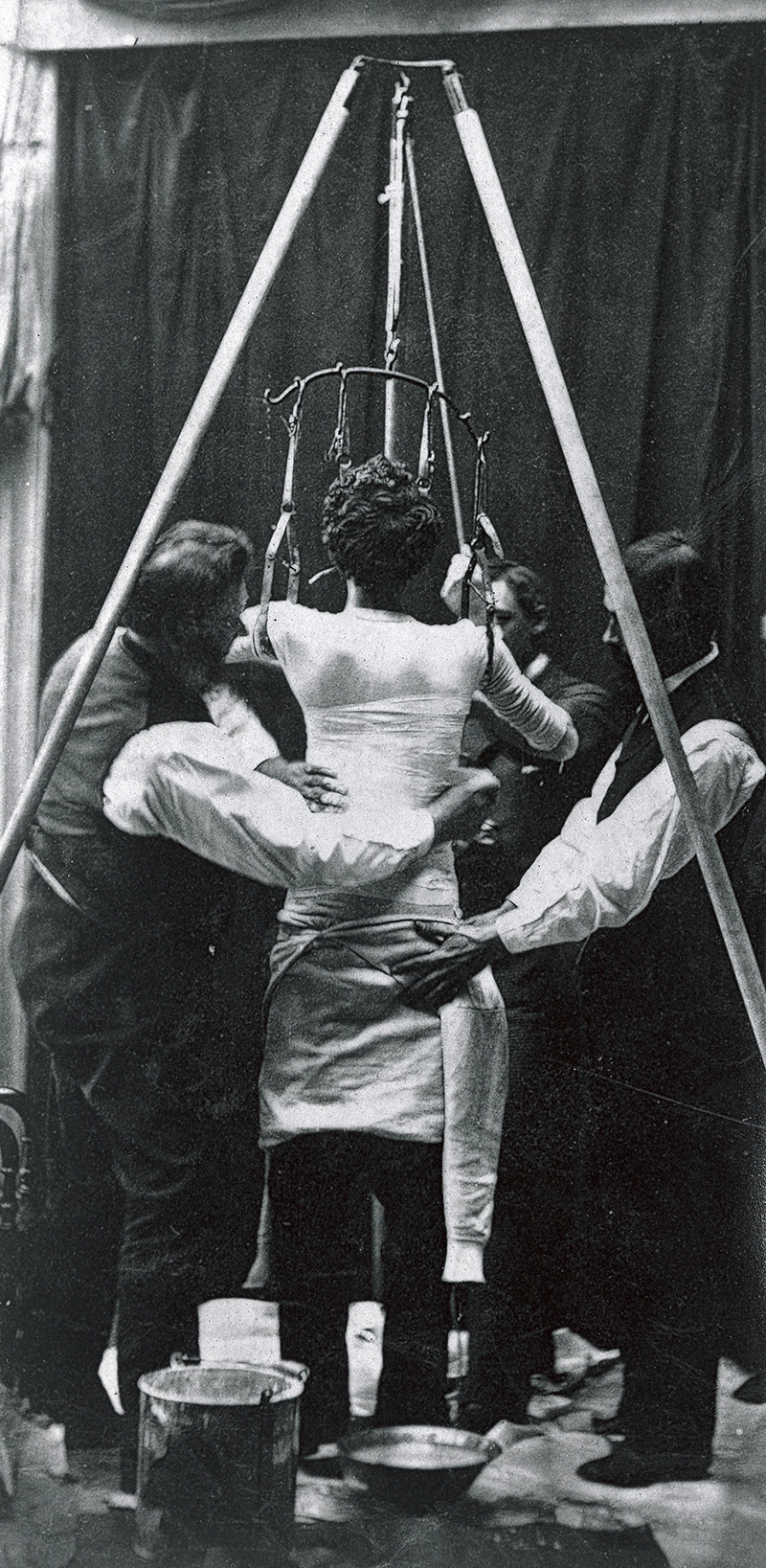
Your clients will feel better (and arguably, retain the proprioceptive effects of your work much longer) if you encourage whole-body mobility, rather than trying to simply correct the spine's static shape. Feel for the places and directions your client can and can't move; use gentle active movement and breath; and think about evoking a three-dimensional, whole-body kinesthetic experience in your work, rather than becoming over-focused on trying to passively stretch or straighten out the spine's static shape (Image 4).
As mentioned, and contrary to popular belief, scoliosis is most often asymptomatic (not painful or limiting). As referenced above, multiple studies have found that people with scoliosis do not have back pain any more frequently than people without scoliosis. This knowledge alone can help clients decouple the assumption and fear, common among those with scoliosis, that if their spine has a curved shape, it's flawed or dysfunctional (since a shape is not a dysfunction), and that pain is inevitable (it's not).
Since most scoliosis in adults is well-compensated and asymptomatic9, the best approach for manual therapists is usually "If it ain't broke, don't fix it," if for no other reason than the fact that unskillful work can provoke or worsen pain in those with scoliosis. In my own private practice, in professional supervision of other practitioners, and in our Advanced Myofascial Techniques trainings at AdvancedTrainings.com, experience suggests that this danger is minimized by working to gently increase mobility options and refine proprioception, rather than trying solely to "correct" vertebral position, straighten curves, or remold the shape of the spine (Image 4).
For the times when people do have both scoliosis and pain, the most effective strategy seems to be to treat any pain as pain per se, rather than as "scoliosis pain." That is, whether the spine is curved or not, we approach back pain as back pain, sciatic pain as sciatic pain, etc. This self-evident, empirical, and individualized approach opens multiple possibilities, since as hands-on practitioners, there are numerous things we can do to help with back pain, sciatic pain, and similar issues.
Of course, just because back pain is not more frequent in scoliosis, it doesn't mean scoliosis is always benign or should be ignored. If people with scoliosis do have back pain, it can be more severe than in those without scoliosis,10 so preventing or controlling pain by staying mobile, healthy, happy, and fit become even more important with scoliosis. Skilled hands-on work can be an effective part of this kind of pain prevention, pain management, and overall self-care.
Severe scoliosis (usually described as over 40-50 degrees)11 can restrict breathing, compress nerves, or impair organ function (including the heart), meaning that the potential side effects of conventional scoliosis treatments (bracing and surgery), as unappealing as they are, are sometimes the least-bad options.
Though most adult scoliosis is mild, stable, and asymptomatic, different considerations apply to scoliosis in children and teens. For example, the younger the age at which scoliosis appears, the faster it typically progresses, and so the greater the chance of it becoming severe enough to cause complications. The prevailing orthopedic view is that as their bones are maturing, teens and preteens have an important window of remedial opportunity for a couple of years around puberty,12 so it is important to refer children and teens with suspected scoliosis for evaluation and regular monitoring.
As hands-on practitioners, there is a lot of good we can do with scoliosis by using our work's ability to increase options for mobility, modulate pain, and help refine the body sense. Stubborn as scoliosis can be, your clients with scoliosis, whether mild or severe, and whether braced, surgically treated, or asymptomatic, may surprise you in their responsiveness and appreciation for the good things your work can bring.
1. John P. Horne, Robert Flannery, and Saif Usman, "Adolescent Idiopathic Scoliosis: Diagnosis and Management," American Family Physician 89, no. 3 (February 2014): 193-98.
2. Shunmoogum A. Patten and Florina Moldovan, "Could Genetic Determinants of Inner Ear Anomalies be a Factor for the Development of Idiopathic Scoliosis?," Medical Hypotheses 76, no. 3 (March 2011): 438-40, https://doi.org/10.1016/j.mehy.2010.11.015; Laura A. Woods et al., "Decreased Incidence of Scoliosis in Hearing-Impaired Children: Implications for a Neurologic Basis for Idiopathic Scoliosis," Spine 20, no. 7 (April 1995): 776-81, https://doi.org/10.1097/00007632-199504000-00006.
3. C. Owen Lovejoy, "The Natural History of Human Gait and Posture: Part 1. Spine and Pelvis," Gait & Posture 21, no. 1 (January 2005): 95-112, https://doi.org/10.1016/j.gaitpost.2004.01.001.
4. Kristen F. Gorman and Felix Breden, "Idiopathic-Type Scoliosis is Not Exclusive to Bipedalism," Medical Hypotheses 72, no. 3 (March 2009): 348-52, https://doi.org/10.1016/j.mehy.2008.09.052.
5. Horne et al., "Adolescent Idiopathic Scoliosis: Diagnosis and Management"; Schwab et al., "Adult Scoliosis: Prevalence, SF-36, and Nutritional Parameters in an Elderly Volunteer Population," Spine 30, no. 9 (May 2005): 1082-85, https://doi.org/10.1097/01.brs.0000160842.43482.cd.
6. Steven S. Agabegi et al., "Natural History of Adolescent Idiopathic Scoliosis in Skeletally Mature Patients: A Critical Review," Journal of the American Academy of Orthopaedic Surgeons 23, no. 12 (November 2015): 714-23, https://doi.org/10.5435/JAAOS-D-14-00037; John P. Kostuik and John Bentivoglio, "The Incidence of Low-Back Pain in Adult Scoliosis," Spine 6, no. 3 (May/June 1981): 268-73, https://doi.org/10.1097/00007632-198105000-00009; Roger P. Jackson, Edward H. Simmons, and Daniel Stripinis, "Incidence and Severity of Back Pain in Adult Idiopathic Scoliosis" Spine 8, no. 7 (October 1983): 749-56, https://doi.org/10.1097/00007632-198310000-00011.
7. Jae-Hyuk Shin et al., "Investigation of Coupled Bending of the Lumbar Spine During Dynamic Axial Rotation of the Body," European Spine Journal 22, no. 12 (December 2013): 2671-77, https://doi.org/10.1007/s00586-013-2777-6.
8. Vedat Deviren et al., "Predictors of Flexibility and Pain Patterns in Thoracolumbar and Lumbar Idiopathic Scoliosis," Spine 27, no. 21 (November 2002): 2346-49, https://doi.org/10.1097/00007632-200211010-00007.
9. Schwab et al., "Adult Scoliosis: Prevalence, SF-36, and Nutritional Parameters in an Elderly Volunteer Population."
10. Jackson et al., "Incidence and Severity of Back Pain in Adult Idiopathic Scoliosis."
11. Hans-Rudolf Weiss and Deborah Goodall, "Rate of Complications in Scoliosis Surgery: A Systematic Review of the Pub Med Literature," Scoliosis 3, no. 1 (August 2008): 9, https://doi.org/10.1186/1748-7161-3-9.
12. Scoliosis Research Society, "Treating Scoliosis," accessed February 2020, www.srs.org/patients-and-families/conditions-and-treatments/adolescents/treating-scoliosis.
This variation of your massage stance can reduce discomfort, help conserve strength, and use your movement and body weight most efficiently during a session.
Caring for elderly clients requires the massage therapist to have a keen awareness, not only of the characteristics unique to the client but also of the various members of the client’s care team.
Changing muscle memory habits as they relate to mobility and movement can be hard. Luckily, you are there to help clients along so they aren’t forging a new path alone.
While tension-reducing techniques can help when issues arise from forward-head posture, addressing joint restrictions through manual therapy can prove more significant.