


Superior Outcomes
A treatment plan is what elevates massage therapy from a service to a therapeutic profession. It is the tangible output of our clinical reasoning.
I love receiving massages that include joint movement techniques. There's something about the surrender that is required to allow it to be most beneficial to the session; it invites an open body and mind. It's also informative—certainly to the practitioner regarding the quality of the tissue that surrounds the joint being mobilized, but also for the recipient when it comes to being aware of how they might be holding a joint or region in protection. Then, when the recipient shifts into that state of surrender, trusts the practitioner, and allows the joint to open, they will likely feel their body say, "Yes . . . ahhh . . . thank you!" as a shift from sympathetic response to parasympathetic response occurs.
Often the difference is dramatic. So, why don't more practitioners incorporate joint movement techniques into sessions? Here, we will explore the benefits and effects of these techniques (also referred to as range-of-motion techniques), propose reasons why these techniques are underutilized, and make a case for bringing them back.
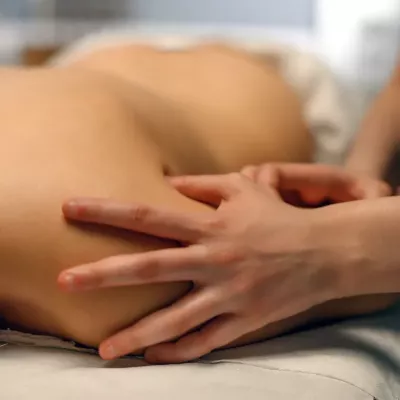
Let's start with defining what joint movement is. Although it may sound straightforward, it's important to be clear that joint movement involves working with a specific joint—either passively, actively, or against resistance—within its available range of motion. Of course, not all joints have the same range of motion. Some are structured to abduct/adduct, some flex/extend, some rotate, and some are jacks of all trades (so to speak)—capable of all possible movements. So when you are incorporating joint movement techniques, be sure you are knowledgeable about the joint's capability and only moving it within that container. Otherwise, you could cause harm.
Whether as a technique within a massage session or as part of a self-care routine, joint movement can have vast and profound benefits and effects.
For starters, tissues that hold joints in place are either stretched or slackened during joint movement application, either of which can cause a sigh of relief. These surrounding tissues are encouraged to balance and maintain healthy range of motion. As we move about in our daily lives, patterns develop, especially in the centralized areas around the joints where movement originates. Reminding those tissues of their optimum state of being helps to unwind those patterns and encourage health. Also, the muscles that cross the joint can perform more effectively and efficiently.
In joints that have sustained injury, tissues might become adhered. To some extent, we need to honor that since this response is intended to provide support to the weakness that results from the injury. However, it's common to armor the injured area by not moving it as fully as it is capable, and further rigidity results. When we move the joints gently, slowly, and mindfully, we help break up the unnecessary tissue buildup that comes from injury and encourage only the portion of scar tissue that is necessary to support the weakness.
Joint movement also encourages the production of synovial fluid, which is what lubricates our joints. It's like getting maintenance on your car that includes topping off fluids that might be low. It is simple maintenance that has dramatic long-term benefits. In other words, you're far more likely to have more freedom and minimized pain for years to come.
Lastly, the various types of range-of-motion techniques can be highly informative to the practitioner. Here's a snapshot.
Given all these benefits and effects, why aren't more practitioners engaging in these techniques? What I've observed from students while teaching joint movement techniques is that they are scared to perform them. There are two primary reasons for the fear: communication and coordination.
Performing these techniques absolutely requires client/therapist communication. You can't just pick up a person's arm and start moving it around without giving the client forewarning and some explanation of what you are doing.
"Clarissa, I'm going to take your shoulder joint through its range of motion to see if we can open up the tissues around it and provide some relief to the tingling you've been feeling down your arm. This will also help me explore what part of the joint and surrounding muscles are actually tight and causing the problem. Are you OK with me lifting your arm and moving it around slowly?"
Given all these benefits and effects, why aren't more practitioners engaging in these techniques? What I've observed from students while teaching joint movement techniques is that they are scared to perform them.
Wait for a response from the client. If yes, then, "Great. Now, as I do this, the best thing you can do is relax and surrender the weight of your arm into my hands. Be like a rag doll (or a noodle, or whatever other analogy works). I will completely support you throughout the movement. When I get to what feels like a maximum stretch for you, just say 'we're there'."
This communication is not difficult. But it can cause some anxiety for therapists, especially those right out of school. Of course, when asking the client to participate, such as in active range of motion or resisted range of motion, there is more to the dialogue. Still, as you do it more frequently, it becomes as natural as any other massage skill you've learned.
I should probably say more broadly "application" rather than simply coordination; however, the root of the fear is typically the act of moving someone's limp limb around and having some concerns you'll fumble. Allow me to outline some guidelines for how you can perform range of motion with a client in a safe manner.
As previously mentioned, this includes telling them what you intend to do, why you are doing it, asking their permission, and verbally guiding them on how to "surrender."
Warm up the joint. While joint movement techniques can be used as pre-session assessment, within the session itself they typically occur at the end of working a particular body part or region. This is because warming the tissue around the joint avoids injury or re-injury. Plus, it's when the tissue is warm that you safely get deeper stretches. When you do use these techniques for pre-session assessment, be mindful you are probably assessing cold tissue, so don't overdo it.
Support the joint securely. When you lift a limb, place your hands on the joint or joints themselves so you avoid hyperextension. For example, if you are moving the hip joint, grasp the knee and the ankle. The knee is especially susceptible to hyperextension without support. Or, when you are moving the shoulder joint, grasp the elbow and wrist. Not only does this protect the joints themselves but it also communicates solid support to the client so they are most able to let go.
Move slowly. This guideline speaks for itself. Go slow. Allow the surrender.
Feel the "end" and honor it. Ideally, your client will tell you when you've hit the end of their range of a particular joint (especially because you have asked them to!). But also honor your felt sense. If you feel resistance, stop pushing and check in with your client.
No one was born performing joint movement techniques, so give yourself a break as you learn or relearn. After some fumbling around followed by persistent practice, it becomes natural. Client communication and coordination is no different. All it takes is just doing it!
To support you in reviving your use of joint movement techniques, practice each guideline with a colleague, family member, or friend, and then see how adding this variety to your sessions keeps your work fresh and your clients breathing a sigh of relief.
A treatment plan is what elevates massage therapy from a service to a therapeutic profession. It is the tangible output of our clinical reasoning.
Context is powerful: Even light, mindful touch can significantly shift pain and proprioception, reminding us that how we work matters as much as what we do.
Deep gluteal syndrome can be triggered by multiple causes. Sorting through those causes can be tricky, but doing so will also help your clients.
Considering the situation that led to your client’s pain can prove as valuable as understanding where the pain exists.